You'll receive the latest updates on new standards, guidelines, and educational resources, as well as expert insights to help enhance your laboratory's performance and compliance.
April 2, 2026
Behind the Diagnosis: How Laboratory Testing Guided a Complex Histoplasmosis Case
Mountain biking along the dirt trails in Tennessee was a favorite pastime for then 15-year-old Maggie Weiss. Even while living with juvenile arthritis, Maggie remained a highly athletic teenager who enjoyed competitive swimming, attending NASA Space Camp, and nurturing a growing interest in medicine.

Mountain biking along the dirt trails in Tennessee was a favorite pastime for then 15-year-old Maggie Weiss. Even while living with juvenile arthritis, Maggie remained a highly athletic teenager who enjoyed competitive swimming, attending NASA Space Camp, and nurturing a growing interest in medicine.
But in August 2025, that momentum was suddenly interrupted. A diagnosis of histoplasmosis forced Maggie off the trails and onto a far more uncertain path, one defined by months of treatment, recovery, and a long-term course of antifungal therapy expected to last up to three years.
The answer pointed back to the trails. Histoplasma capsulatum, a dimorphic fungus that causes histoplasmosis, found its way into Maggie’s lungs. For Maggie, the likely source of exposure was the very environment she loved, disturbed soil along mountain biking trails combined with an already suppressed immune system because of her arthritis treatment.
The fungus is often found in soil contaminated with bird or bat droppings. When these areas are disturbed, microscopic spores can become airborne and, once inhaled, lead to infection in the lungs. Histoplasmosis is endemic in the Ohio-Mississippi Valley, where Maggie and her family live. Experts also noticed a surge in cases around this time.
For two weeks, Maggie experienced low-grade fever, chills, extreme fatigue, and headaches, symptoms that are often nonspecific and can point towards a wide range of other conditions. In patients who are immunosuppressed, these signs may be even less indicative of a clear diagnosis.
“She didn’t have a cough or anything that would have made me think of histoplasmosis, said Dr. Vivian Weiss, a Pathologist at Vanderbilt Health, and Maggie’s mother. But sometimes people without functional immune systems don’t display typical symptoms.”
After two weeks of persistent illness, Maggie visited her pediatrician, where initial testing ruled out common viral infections such as mononucleosis. When those results came back negative, she was referred to her rheumatologist, who immediately ordered testing for histoplasmosis. The results confirmed the diagnosis.
At Vanderbilt Health, additional laboratory testing, including rapid urine antigen testing and blood analysis, provided critical confirmation and helped guide next steps in care. Within 24 hours of receiving results, Maggie began a course of oral antifungal therapy.
“Being able to get that rapid turnaround in urine testing is key,” Dr. Vivian Weiss said. “In Maggie’s case, her symptoms were very vague. Without laboratory testing, there was no clear way to know what this was and how to treat it appropriately.”
Due to the immunosuppressive effects of her arthritis medications, Maggie’s recovery was not as straightforward as other patients. Early in her treatment, the once mountain-biking teen was hospitalized after developing disseminated histoplasmosis, a severe form of the infection that spreads beyond the lungs. A CT scan revealed that the infection had progressed extensively throughout her lungs, disrupting her school year, sports, and daily life. Despite these challenges, Maggie had the support of a strong medical team at Vanderbilt Health, including dedicated laboratory professionals equipped to navigate even the most complex infectious disease cases.
“The infectious disease team put her on an oral antifungal within about 24 hours of testing with a follow up in a few days in clinic,” Dr. Vivian Weiss said. “For most patients that’s all that’s needed. But for Maggie, she was a lot more sick than we initially appreciated. She’s a tough kid. She was still trying to start the school year. Ultimately, the team decided to hospitalize her for disseminated disease. We were fortunate to have such good care, because that critical decision significantly improved her course.”
Maggie underwent in-patient treatment at Vanderbilt Health, where she received intravenous amphotericin, a potent antifungal used to treat invasive fungal infections, including histoplasmosis. However, both the oral and IV treatments led to significant side effects, including dangerously low potassium levels, which proved debilitating. As a result, she was readmitted to Vanderbilt Health, where her care team worked tirelessly to stabilize her and support her recovery.
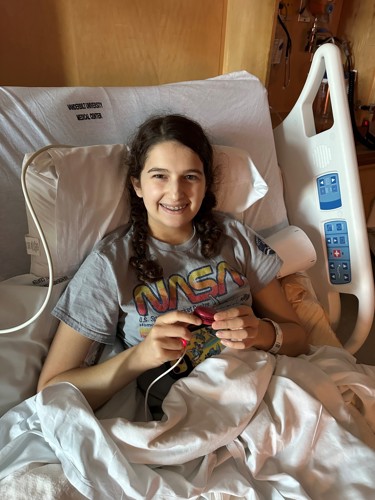
Maggie Weiss at Vanderbilt Health
“Maggie’s journey changed my perspective quite a bit. I’m a pathologist and diagnose many patients with histoplasmosis,” said Dr. Vivian Weiss. “While I’m not directly involved in treatment and management, I hadn’t fully appreciated how toxic these drugs can be, especially for children with suppressed immune systems. It was very eye-opening. Now, when I see a case of histoplasmosis, I have a much deeper appreciation for what patients and their families experience.”
Once back home, Maggie continued her recovery. Despite challenges she faced, a year later, she has returned to swimming and continues to nurture her passion for NASA and science, a reflection of both her resilience and the care she received.
Her case also led to meaningful changes at Vanderbilt Health, strengthening laboratory systems through the implementation of rapid in-house blood testing capabilities that were not previously available.
“The levels in the blood are critical in deciding how long you’re going to treat a patient,” Vivian said, “I’m thrilled to know now that patients who get hospitalized not only have rapid urine testing but also have rapid blood testing.”
As for Maggie, the experience may have changed her life in some ways, but she remains a determined young woman who uses her challenges to fuel her ambitions. During her time at Vanderbilt Health, she had the opportunity to tour the laboratory and meet the professionals working behind the scenes, those who played a critical role in helping her recover and return to herself.
Maggie now aspires to be a doctor for NASA one day, with the goal of providing medical care for astronauts embarking on space missions. While she may have stepped away from mountain biking, she remains committed to swimming, an activity that offers both competition and therapeutic benefits for her arthritis. Thanks to the care she received, Maggie continues to move forward, taking steady strokes toward the future she envisions.
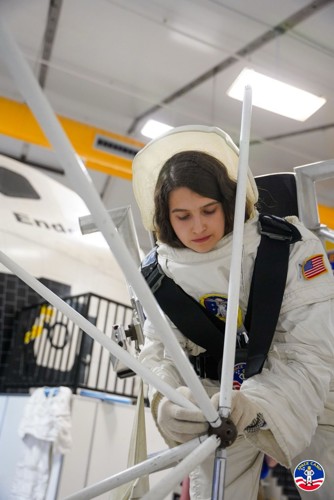
Stories like Maggie’s underscore the critical role laboratory professionals play in shaping patient outcomes, often behind the scenes, but never without impact.
“Every sample has so much value, it represents a person, a path forward, an illness,” said Dr. Vivian Weiss. “There is a patient on the other end of every result. I am deeply grateful for the work laboratory professionals do. Even if they don’t always see the impact, it truly makes a difference for families.”