You'll receive the latest updates on new standards, guidelines, and educational resources, as well as expert insights to help enhance your laboratory's performance and compliance.
February 11, 2026
Women Who Lead: Perspectives From Laboratory Medicine
In recognition of International Day of Women and Girls in Science, we're celebrating the women whose leadership, expertise, and vision continue to shape the future of laboratory medicine. CLSI is honored to highlight Ann Ho Cichocki, CLS, MLS (ASCP) CM, Senior Clinical Laboratory Scientist at Stanford Health Care, and Treasurer for the American Society for Clinical Pathology (ASCP) Northern California Chapter. Mrs. Cichocki is a dedicated laboratory professional whose work exemplifies both scientific excellence and a commitment to advancing the field. In this Q&A, she shares insights from her journey, challenges she has navigated, and the advice she hopes will inspire the next generation of women entering science.

In recognition of International Day of Women and Girls in Science, we're celebrating the women whose leadership, expertise, and vision continue to shape the future of laboratory medicine. CLSI is honored to highlight Ann Ho Cichocki, CLS, MLS (ASCP) CM, Senior Clinical Laboratory Scientist at Stanford Health Care, and Treasurer for the American Society for Clinical Pathology (ASCP) Northern California Chapter. Mrs. Cichocki is a dedicated laboratory professional whose work exemplifies both scientific excellence and a commitment to advancing the field. In this Q&A, she shares insights from her journey, challenges she has navigated, and the advice she hopes will inspire the next generation of women entering science.
About the Featured Leader
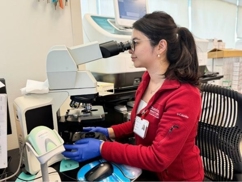
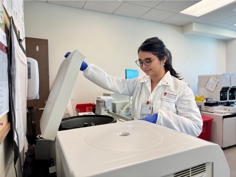
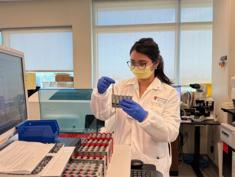
Ann Ho Cichocki is a clinical laboratory scientist and Northern California chapter leader for the American Society for Clinical Pathology, representing thousands of laboratory professionals across the West Coast. She has built her career around advancing visibility, integrity, and recognition of the laboratory workforce.
In addition to her work in quality and DEI, Ann is actively spearheading a legislative initiative to challenge California's newly increased licensure fees, which affect more than 80,000 laboratory professionals statewide, including CLS, MLT, and CPT-1 license holders. Her advocacy reflects her commitment to protecting the profession and ensuring laboratorians have a voice in decisions that impact her work.
Ann is passionate about empowering the next generation of women in science, encouraging them to embrace leadership, advocacy, and community within the laboratory field.
Q: What sparked your interest in laboratory medicine or science?
A: My interest in laboratory medicine was sparked early by curiosity, by a love of problem-solving, and by a deep desire to help people in ways that aren’t always visible but are always vital. Many of us were drawn to science because it sits at the intersection of precision and purpose: every test result tells a story, informs a diagnosis, and ultimately impacts a patient’s life. As women in the laboratory, we learned quickly that while our work often happens behind the scenes, its influence is front and center in healthcare. That realization shaped not only our careers, but also our sense of responsibility. It’s what motivates me today to advocate not just for the science, but for the 80,000 licensed laboratory professionals in California whose expertise, integrity, and voices must be protected for the sake of patients and the future of the clinical labs.
Q: Can you share a moment in your career that shaped the scientist or leader you are today?
A: A pivotal moment in my career came when I saw how decisions about laboratory legislation were being made without meaningful input from the professionals who actually do the work. As a clinical laboratory scientist, I understood the science, the workflow, and the real-world consequences, but I also realized that expertise alone doesn’t guarantee a seat at the table. Watching policies move forward that have placed strain on laboratories and threatened patient safety was a wake-up call for me. It pushed me to step beyond my bench role and into leadership and advocacy. That moment reshaped how I see my responsibility: not only to deliver accurate results, but to speak up for my profession, mentor others, and help ensure that the voices of laboratory professionals are heard where it matters most, to lawmakers and to Congress.
Q: What challenges have you faced as a woman in science, and how did you overcome them?
A: One of the biggest challenges I’ve faced as a woman in science has been being heard and recognized in a profession that is essential, yet often invisible. Laboratory professionals are relied upon for critical medical decisions, but our expertise is frequently overlooked, especially in leadership, regulatory, and legislative spaces. As a woman, that invisibility can be compounded by assumptions about authority, expertise, or who “belongs” at decision-making tables. I overcame this by leaning into my knowledge, building confidence through collaboration with other women in leadership across the lab industry, and refusing to stay silent when policies or practices put our profession or patient care at risk in California. Advocacy became a way to turn challenges into purpose. By standing alongside other women lab scientists, mentoring others, and speaking with clarity and persistence, I’ve learned that change happens when we collectively claim our voice and use it with intention.
Q: What advice would you give to young women and girls considering a career in laboratory medicine?
A: I would tell them that laboratory medicine and pathology is a powerful and meaningful career, one where your knowledge truly saves lives, even if you’re not always seen. Don’t underestimate the value of your voice or your expertise. Learn the science well, ask questions, and seek out mentors who will support and challenge you. Just as importantly, understand that your role doesn’t have to stop at the bench. The profession needs women who are willing to lead, advocate, and shape the future of the clinical laboratory. Be confident in what you bring, stay curious, and know that when you speak up—for yourself, your colleagues, or your profession, you are continuing a legacy of women who are strengthening science and healthcare for generations to come.
Q: How do you hope to see the field evolve for the next generation of women in science?
A: I hope to see a future where women in laboratory medicine are not only well represented, but fully recognized as essential leaders in healthcare, policy, and innovation. That means equitable access to leadership roles, fair and transparent regulations, and decision-making processes that include the voices of the professionals doing the work. For the next generation, I want advocacy to be normalized, not as something extra, but as a natural extension of being a lab scientist. My hope is that young women entering this field will inherit a profession that values their expertise, protects their licensure, and empowers them to influence change confidently. When women in science are supported and heard, the entire healthcare system, and the patients we serve, are stronger for it.
Q: What do you love most about working in laboratory medicine?
A: What I love most about laboratory medicine is knowing that the work I do every day has a direct and meaningful impact on patient care, even when it happens behind the scenes. There is something deeply fulfilling about combining science, critical thinking, and precision to deliver results that clinicians rely on to make life-changing decisions. I also value the sense of teamwork and shared purpose within the laboratory—everyone plays a vital role, and excellence truly depends on collaboration. Being part of a profession that upholds accuracy, integrity, and public health while continuously evolving to meet new challenges is what makes laboratory medicine both rewarding and inspiring to me.
Q: How has your journey as a woman in science shaped your leadership today?
A: My journey as a woman in science has taught me the importance of resilience and lifting others as I lead. Navigating a field where the work is critical but often unseen helped me develop a leadership style rooted in inclusion and clarity—one that
values listening as much as speaking. I’ve learned that leadership isn’t about titles, but about influence and responsibility. Being a woman in science has also sharpened my awareness of who is missing from the conversation, which drives me to create space for others, advocate for fair representation, and lead with intention. That perspective continues to shape how I show up as a leader today—grounded in purpose, collaboration, and a commitment to meaningful change for the laboratory community.
Mentor Spotlight
We also recognize the women who mentor, uplift, and create pathways for others in the laboratory community. One of those leaders is Laura Laakso, Administrative Director at Tahoe Forest Health System and President-Elect for the ASCP Northern California Chapter.
Laura is widely respected for her steady leadership, her advocacy for the clinical laboratory workforce, and her commitment to shaping strong, confident young scientists. She is known not only for her depth of knowledge, but for her willingness to mentor with intention, offering guidance that is practical, inclusive, and rooted in compassion for the people behind the work.
On International Day of Women and Girls in Science, February 11, 2026, I am also inspired by women who lead, mentor, and push us all forward. Laura Laakso, Administrative Director of Tahoe Forest Health System in Truckee, CA, is a standout mentor to the next generation of clinical lab scientists. Her guidance shows how inclusive leadership and hands-on support foster curiosity, resilience, and excellence. I am grateful for mentors like Laura, and I strive to pay it forward to other young scientists.
Additional Mentors Who Inspire Ann
Ann also acknowledges the leadership of Alexandra (Ali) Brown, Interim CEO of the American Society for Clinical Pathology, whose advocacy and visibility in laboratory medicine demonstrated what it means to lead with purpose. She also credits Alison (Ali) Kerr for her early-career mentorship, offering guidance on resilience, career growth, and finding one’s professional mission.
’ve been fortunate to learn from women leaders who model purpose-driven, visible leadership in laboratory medicine. Alexandra (Ali) Brown, ASCP Interim CEO, showed me the impact of stepping into advocacy and policy conversations with confidence and clarity.
I’ve also been inspired by Alison (Ali) Kerr, whose guidance on career growth and resilience reinforced how powerful mentorship can be. Their leadership reminds me why it’s essential for women in science to speak up, mentor others, and shape the future of our profession.
As we celebrate this day, Ann's perspective reminds us how essential women are to the strength, innovation, and advocacy of the laboratory community. Her leadership reflects the resilience and purpose that define this profession, and her commitment to creating a more inclusive, sustainable future continues to elevate those around her. We are grateful to highlight her work and the broader impact women in laboratory medicine make every day.
Ann continues to advocate for the thousands of laboratory professionals impacted by California’s recent licensure fee increases. To learn more about the issue, or to support the initiative she is helping lead, you can visit the petition here.